EXOA8 | Future and current instruments to detect and characterise extrasolar planets and their environment

EXOA8

Future and current instruments to detect and characterise extrasolar planets and their environment
Convener: Lorenzo V. Mugnai | Co-conveners: Andrea Bocchieri, Elodie Choquet, Camilla Danielski, Iva Laginja, Jiri Zak
Orals FRI-OB2
| Fri, 12 Sep, 09:30–10:18 (EEST)
 
Room Venus (Veranda 3)
Orals FRI-OB3
| Fri, 12 Sep, 11:00–12:12 (EEST)
 
Room Venus (Veranda 3)
Posters THU-POS
| Attendance Thu, 11 Sep, 18:00–19:30 (EEST) | Display Thu, 11 Sep, 08:30–19:30
 
Finlandia Hall foyer, F187–195
Fri, 09:30
Fri, 11:00
Thu, 18:00
Exoplanets are being discovered in large numbers thanks to recent and ongoing surveys using state-of-the-art instrumentation from the ground and space. In the next years, new astronomical instruments will scout ever more distant regions of our Galaxy and they will validate new technology for the ultimate direct characterisation of temperate exoplanets. Such a change in physical and technological horizon will allow us to overcome the current observational biases in the search for alien worlds, and to gain a deeper understanding of the chemical and physical properties of exoplanets and the environment that surround them. Ultimately, we will be able to unveil processes of formation and evolution of planets, together with those of their atmospheres, on a scale much larger than our Solar Neighbourhood.

The goal of this session is to bring together the instrumentation and observational communities that are underpinning the future of this field. Contributors are invited to review ongoing programmes of discovery and characterisation of both exoplanet and circumstellar discs, to update on the progress of planned instrumentation programmes, and to present innovative ideas for future instrumentation.

Session assets

Orals FRI-OB2: Fri, 12 Sep, 09:30–10:30 | Room Venus (Veranda 3)

Chairpersons: Jiri Zak, Andrea Bocchieri, Lorenzo V. Mugnai
09:30–09:42
|
EPSC-DPS2025-1528
|
ECP
|
On-site presentation
Valentin Fonteneau, Maud Langlois, and Camille Graf and the ELF Consortium

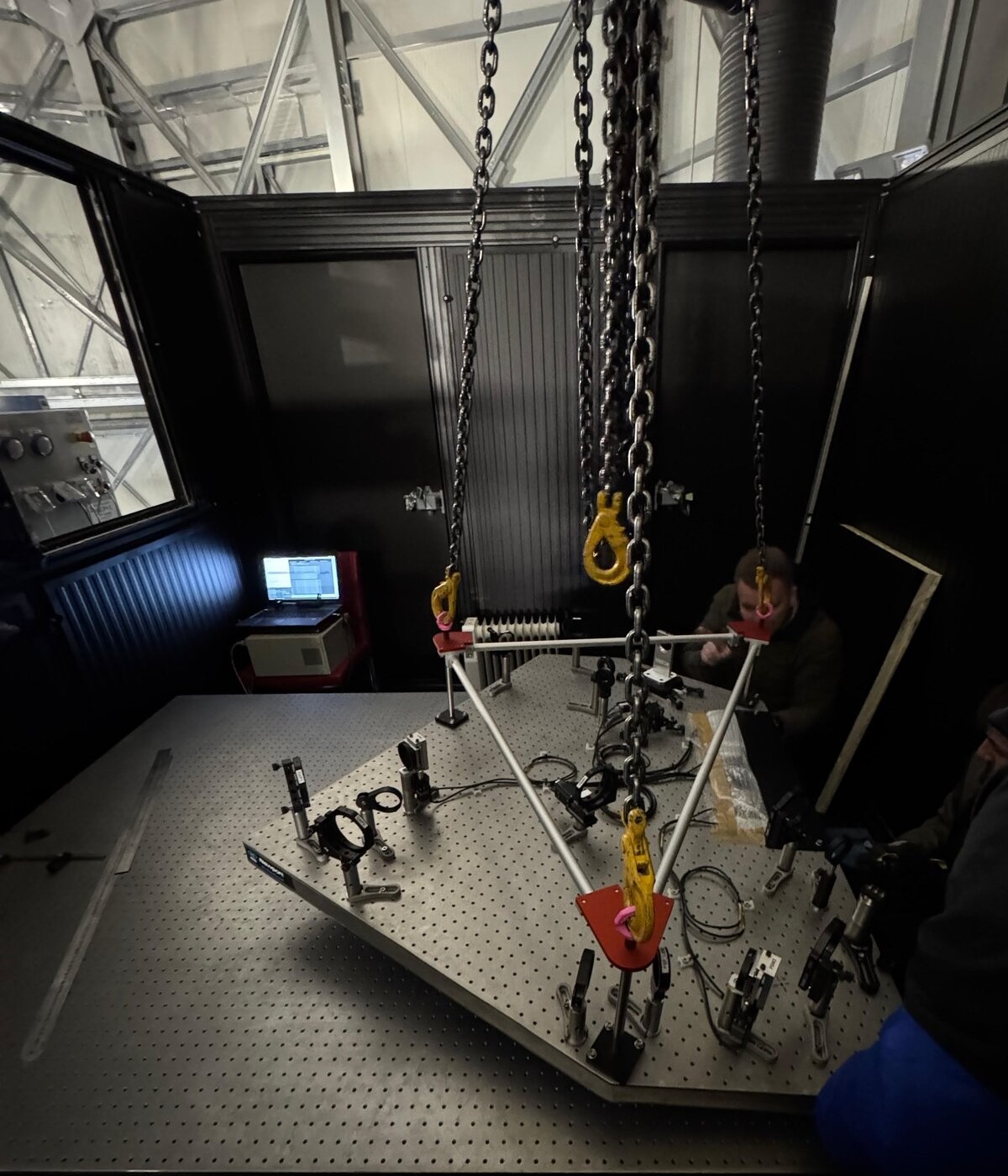
The Small ELF (sELF) project is a fixed pupil interferometer dedicated to high contrast having a 3.5 m telescope angular resolution and allowing direct “dark hole” coronagraphy. Such configuration requires special extreme adaptive optics (XAO) systems to cope with the diluted apertures, and to meet the high contrast requirements. The integrated Mach-Zehnder wavefront sensor has been proposed to counteract these limitations. In this paper, we report on our numerical simulations and on the experimental validations of the sELF XAO system. This system delivers high strehl while operating in synergy with focal plane wavefront sensing to support cophasing and dark hole coronography.

How to cite: Fonteneau, V., Langlois, M., and Graf, C. and the ELF Consortium: Small-ELF project: Performance of XAO, cophasing and dark hole coronography for high contrast exoplanet direct detection, EPSC-DPS Joint Meeting 2025, Helsinki, Finland, 7–13 Sep 2025, EPSC-DPS2025-1528, https://doi.org/10.5194/epsc-dps2025-1528, 2025.

09:42–09:54
|
EPSC-DPS2025-558
|
ECP
|
Virtual presentation
Marina Centenera, Jesús Aceituno, Pedro Amado, and Kalaga Madhav

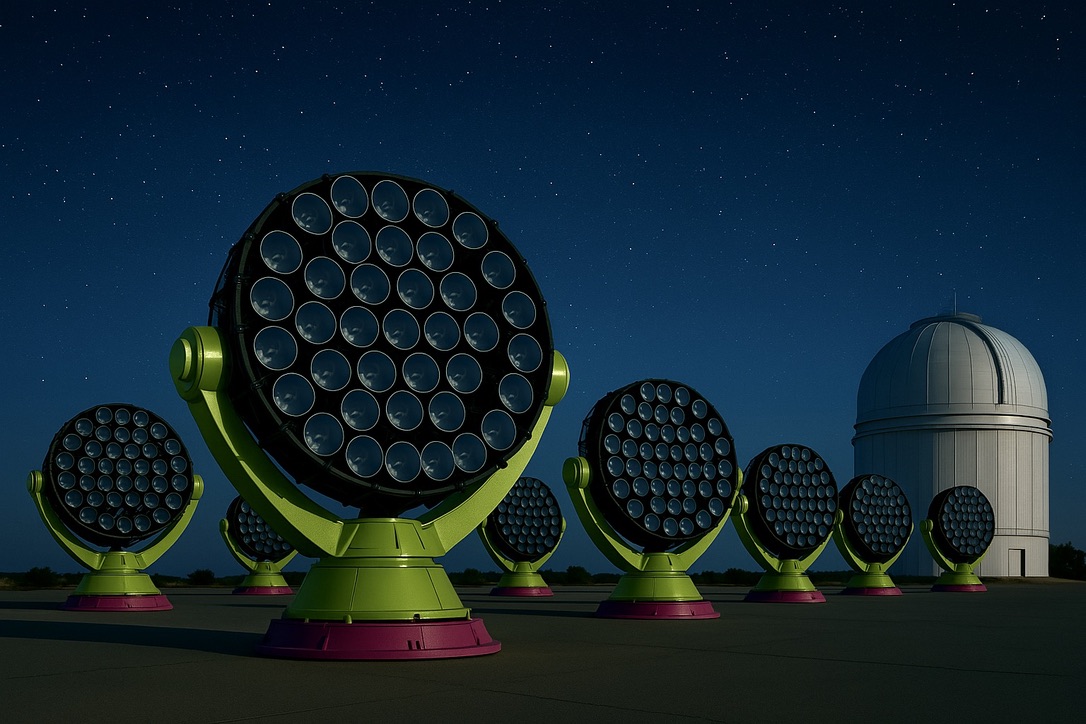
The Multi ARray of COmbined Telescopes (MARCOT) is a novel astronomical facility concept developed to meet the increasing demand for scalable, cost-effective, and modular telescope architectures. This project is structured in multiple phases, the first one is MARCOT Pathfinder, currently installed at the Calar Alto Observatory (CAHA, Spain), features an array of seven small Optical Tube Assemblies (OTAs) operating coherently to enhance the signal-to-noise ratio (SNR)—a critical factor for exoplanet detection via high- precision radial velocity (RV) measurements.

In the second phase, a 5-meter equivalent module is planned, which will push the limits of photonic-enabled technologies and become the telescope with the largest light-collecting capacity at CAHA. Future phases will replicate this module to gradually increase the array’s collecting power, scaling up to 10-meter and eventually 15-meter equivalents. Each module will be housed in its own small dome, preserving modularity while enabling significant scientific scalability.

To achieve these large apertures with high SNR, a multi-mode photonic lantern (MM-PL) is under development. This device couples light from multiple OTAs into a single multi-mode fibre, feeding a high- resolution spectrograph. In this talk, we present the design of MARCOT’s spectroscopic architecture and the development of a dedicated photonic laboratory, aimed at fabricating and characterizing MM-PLs. This facility is essential for optimizing coupling efficiency and validating MM-PL performance through extensive laboratory testing. We will report on the first laboratory characterization of an MM-PL, describe its fabrication process, and present design improvements to maximize transmission efficiency.

In parallel, we have developed simulation codes to estimate the radial velocity precision achievable by different MARCOT module configurations when connected to a high-resolution spectrograph. These simulations indicate that the array will be capable of accessing a significant number of previously unobservable targets, including faint stars, enabling the discovery of new exoplanets beyond the reach of current facilities.

Additionally, a new code is under development to conduct a comprehensive multi-criteria optimization study, aimed at identifying the optimal parameters for the telescope architecture, photonic lantern design, and instrument interface. This systematic approach will guide future design decisions and maximize the overall scientific return of the facility.

There is currently a pressing need for telescopes with greater light-collecting capacity to improve the performance of high-resolution instruments, which are currently limited by the apertures of existing ground- based observatories. This is essential for both exoplanet detection and atmospheric characterization. However, the post-ELT era is constrained by economic limitations that prevent the construction of telescopes beyond ~40 meters. This reality underscores the need for more cost-effective alternatives that can achieve similar scientific goals.

In this context, MARCOT emerges as a promising solution. In the post-ELT landscape, MARCOT and instruments like ANDES will share a small region of sky, allowing MARCOT to perform preliminary observations and help identify the most promising exoplanet targets for ANDES. Due to its extended dedicated observing time for exoplanets, MARCOT will be able to survey a larger number of targets with high cadence. Moreover, in the northern hemisphere, MARCOT will be the only facility offering such a high collecting power combined with significant time dedicated to exoplanet science.

How to cite: Centenera, M., Aceituno, J., Amado, P., and Madhav, K.: MARCOT: Modular Astronomy in the Post-ELT Era through Photonic Integration , EPSC-DPS Joint Meeting 2025, Helsinki, Finland, 7–13 Sep 2025, EPSC-DPS2025-558, https://doi.org/10.5194/epsc-dps2025-558, 2025.

09:54–10:06
|
EPSC-DPS2025-564
|
On-site presentation
maud Langlois

SAXO+ is a project to upgrade the SPHERE extreme Adaptive Optics instrument at the VLT to boost the current performances of detection and characterization of exoplanets and disks. 

The main science drivers are 1/ to access the bulk of the young giant planet population down to the snow line (3-10 au), to bridge the gap with complementary techniques (radial velocity, astrometry); and 2/ to observe fainter and redder targets in the youngest (1 − 10 Myr) associations compared to those observed with SPHERE to directly study the formation of giant planets in their birth environment.

SAXO+ is a second stage AO system equipped with an IR pyramid wavefront sensor for increasing the sampling frequency (from ~1 to 3 kHz) as well as the sensitivity in the infrared (+2-3 mag). SAXO+ is developed in coordination with the ESO technology development group and will serve as a demonstrator for the future planet finder (PCS) of the ELT. SAXO+ has concluded its consolidation phase in Apr 2024 and will continue its development to aim for on-sky testing in 2027. 

After introducing the science cases, we will discuss the SAXO+ system choices and the estimation of performances based on the most recent numerical simulations.

How to cite: Langlois, M.: Upgrading SPHERE with the second stage AO system SAXO+, EPSC-DPS Joint Meeting 2025, Helsinki, Finland, 7–13 Sep 2025, EPSC-DPS2025-564, https://doi.org/10.5194/epsc-dps2025-564, 2025.

10:06–10:18
|
EPSC-DPS2025-1774
|
ECP
|
On-site presentation
Ruben Tandon, Liurong Lin, Lucas Marquis, Axel Potier, Derya Öztürk Çetni, and Jonas G. Kühn

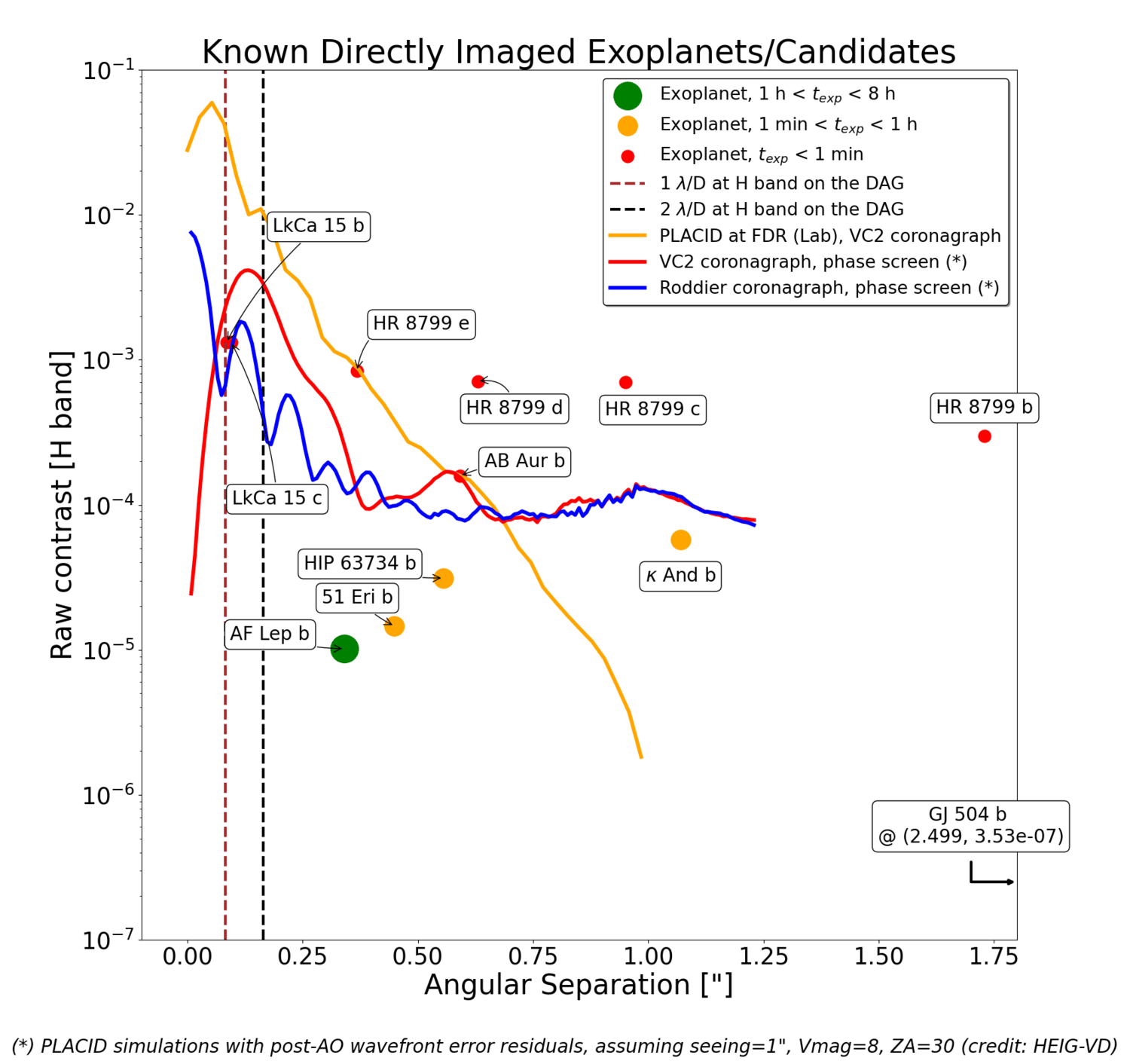
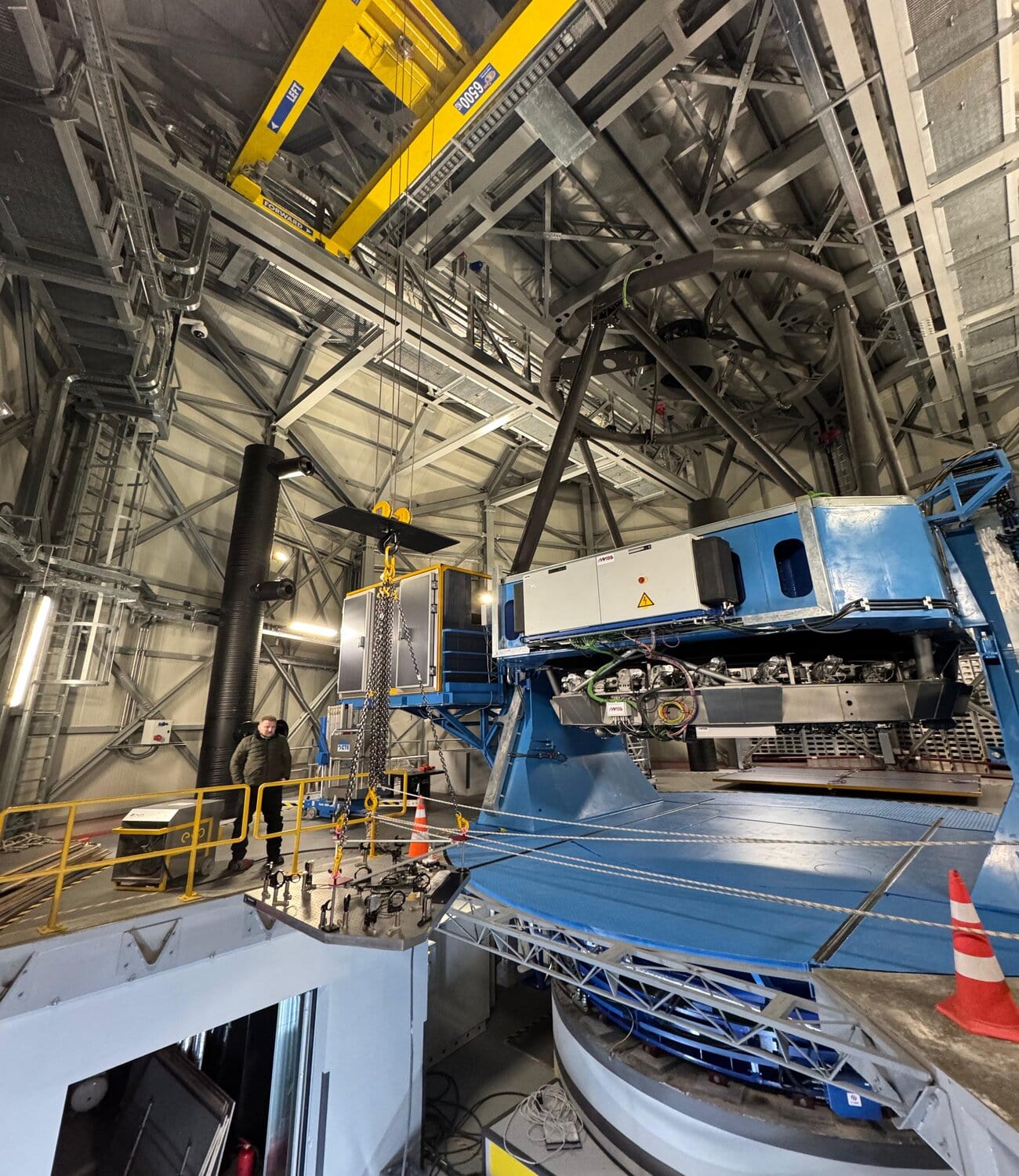
The Programmable Liquid-crystal Active Coronagraphic Imager for the DAG telescope (PLACID) will be the world’s first ever “adaptive stellar coronagraph” facility – with “adaptive” referring to the instrument’s unique ability to adjust in real-time to changing observing conditions.

The PLACID project achieved a major milestone by being delivered to the Turkish National Observatories (TNO) facilities at Atatürk University, Erzurum in March of 2024 and subsequently being installed on the diffraction-limited Nasmyth platform of the new national observatory, the 4-m DAG (Doğu Anadolu Gözlemevi) telescope during the first semester of 2025. The Assembly, Integration and Validation (AIV) activities are currently ongoing with the internal light source, with first light anticipated by the fall/end of 2025.

PLACID consists of a fore-optics coronagraphic intermediate stage platform, positioned between the TROIA extreme adaptive optics (XAO) system and the DIRAC HAWAII-1RG focal-plane array. Its core component is a customized spatial light modulator (SLM) functioning as a programmable scalar focal-plane phase mask (FPM) coronagraph, operating from H- to Ks-band. The dynamically addressed SLM enables software-only adjustments or re-alignments of the FPM pattern, entirely free of actuator motion, offering observers a highly flexible and reconfigurable system.

Preparing for the first observations, the PLACID graphics user interface (GUI) is currently being finalized, while the PLACID on-sky discovery space was estimated, based on laboratory measurements at factory acceptance, as well as simulations with post-AO residual wavefront errors. This was conceived to enable the Turkish and visitor astronomers to plan future high-contrast imaging observations. The science discovery space estimate has been derived using an up-to-date exposure time calculator for PLACID, considering key parameters such as adaptive optics performance, contrast levels, limiting magnitudes, and coronagraphic inner working angle.

The instrument is particularly promising for exoplanet and circumstellar disk imaging, while new developments of the PLACID GUI are in the works for coronagraphic imaging of binary or multiple star systems — a valuable niche science case for PLACID.
Development of the PLACID data reduction software is also currently underway, based on existing high-contrast imaging software architecture (PynPoint).

In parallel to PLACID first science observations in 2026, future development avenues for the instrument include:

  • Self-calibration of non-common path aberrations (NCPAs) using a phase-shifting Zernike wavefront sensor,
  • Coronagraphic nulling tailored for binary or triple star systems, compatible with angular differential imaging (ADI),
  • Time-domain coherent differential imaging (CDI).

We present the delivered PLACID instrument and its discovery space, detailing its current on-site commissioning status, and — if available at the time — the first on-sky results.


How to cite: Tandon, R., Lin, L., Marquis, L., Potier, A., Öztürk Çetni, D., and Kühn, J. G.: The Programmable Liquid-crystal Active Coronagraphic Imager for the 4-m DAG telescope (PLACID) instrument: Discovery Space and Status, EPSC-DPS Joint Meeting 2025, Helsinki, Finland, 7–13 Sep 2025, EPSC-DPS2025-1774, https://doi.org/10.5194/epsc-dps2025-1774, 2025.

Orals FRI-OB3: Fri, 12 Sep, 11:00–12:30 | Room Venus (Veranda 3)

Chairpersons: Andrea Bocchieri, Jiri Zak, Lorenzo V. Mugnai
11:00–11:12
|
EPSC-DPS2025-1790
|
ECP
|
Virtual presentation
Roberto Varas, Pedro J. Amado, and Francisco J. Pozuelos

The ultracool dwarf stars are frequent in the solar neighborhood, but so far only four systems with exoplanets have been confirmed, TRAPPIST-1, SPECULOOS-2 and 3, and Teegarden’s star. There are several reasons for the low number of detections. These stars are faint with their flux peaking in the near-infrared, but the RV information available in this part of the spectrum is lower than in the visible. Thus, we need more stable NIR spectrographs, such is the achievement of the CARMENES-PLUS project, and telescopes with a larger collecting area, such is the goal of MARCOT.  Additionally, ultracool dwarfs are usually fast rotators, resulting in broadened spectral lines, what lowers our capacity for detecting exoplanets.  Selecting slow rotators and correctly handling the fast ones becomes crucial. Regarding the planets, the ones around these stars are usually small, showing low RV amplitudes, few m/s or even in the cm/s regime.  The detectability expected for transits is around 2% whereas it increases to 55% with radial velocities. The strategy used to find periodic signals in these stars is still a problem to be addressed, but we can find it by looking into the successful cases. We evaluate the improvement on the detectability of exoplanets after the upgrades of CARMENES-PLUS in the near-infrared channel, that has taken the instrument’s RV precision below the 1 m/s frontier.  We also analyse the combination of the RV content of the different CARMENES spectral orders to optimize the precision and detectability.

We have a sample of 20 ultracool dwarfs (M6.0 V and later) observed with CARMENES. We analyse the radial velocity precision achieved in each object and for every spectral order of CARMENES, both of the near-infrared and the visible channels. We define two way to evaluate the precision of each spectral order: (i) by the RV error obtained and (ii) by how far the RV estimation of the order is from the final RV value. By means of an iterative process, we obtain the best combination of orders based on the previous order ranking and the detectability obtained based on the estimated RVs. With this, we are able to improve the radial velocity precision more than a 15%.

We also analyse the impact of the telluric absorption correction developed by Nagel et al. 2023. The effect on each spectral order is not the same, not even on different stars, which makes challenging to come to a clear conclusion about the improvement of these corrections. Addtionalluy, we study how to handle the fast rotators, as well as the effect of this rotation on the results. We have computed the projected rotational velocity of all the stars of our sample, and estimated most of the rotational periods. We also update the status of the Teegarden’s star system, now with more than 400 observations with CARMENES over 8 years.

How to cite: Varas, R., Amado, P. J., and Pozuelos, F. J.: Hunting exoplanets around ultracool dwarfs with near-infrared radial velocity spectrographs, EPSC-DPS Joint Meeting 2025, Helsinki, Finland, 7–13 Sep 2025, EPSC-DPS2025-1790, https://doi.org/10.5194/epsc-dps2025-1790, 2025.

11:12–11:24
|
EPSC-DPS2025-1391
|
On-site presentation
Laura Magrini


 The Very High-Resolution Multi-Object Spectrograph (HRMOS) will be proposed as a new instrument for the ESO Very Large Telescope (VLT) as part of the VLT2030 roadmap. HRMOS will play a crucial role in bridging the gap in observational capabilities among the next generation of astronomical instruments planned for the coming decades.

By offering a unique combination of high-resolution and multi-object spectroscopy, HRMOS will enable groundbreaking scientific investigations that would otherwise remain inaccessible. These include the study of extrasolar planets in crowded stellar environments, like open and globular clusters, but also the Galactic bulge and the nearest dwarf galaxies.

How to cite: Magrini, L.: Hot Jupiters in crowded environements, EPSC-DPS Joint Meeting 2025, Helsinki, Finland, 7–13 Sep 2025, EPSC-DPS2025-1391, https://doi.org/10.5194/epsc-dps2025-1391, 2025.

11:24–11:36
|
EPSC-DPS2025-1901
|
On-site presentation
Anne-Marie Lagrange

For many years, the detection and characterization of exoplanets have relied on two distinct approaches: indirect techniques on the one hand, and direct imaging on the other. These methods have traditionally probed very different regions of the mass–period parameter space, with only limited overlap. Today, absolute astrometry is significantly bridging the gap between these domains. The synergy between direct and indirect techniques is becoming increasingly powerful—and will be essential with the advent of next-generation facilities such as the ELTs. In this talk, I will highlight examples of exoplanet detections achieved through the combination of multiple techniques, and demonstrate how upcoming direct imaging instruments will greatly benefit from this multi-technique approach.

How to cite: Lagrange, A.-M.: The Synergy of Direct and Indirect Techniques in Exoplanet Science, EPSC-DPS Joint Meeting 2025, Helsinki, Finland, 7–13 Sep 2025, EPSC-DPS2025-1901, https://doi.org/10.5194/epsc-dps2025-1901, 2025.

11:36–11:48
|
EPSC-DPS2025-1291
|
On-site presentation
Heike Rauer, Ana Heras, Miguel Mas-Hesse, and Isabella Pagano

PLATO, the 3rd Medium class ESA’s mission, is designed to detect and characterize extrasolar planets by photometrically monitoring a large number of stars. PLATO will detect small planets around bright stars, including terrestrial planets in the habitable zone of solar-like stars. PLATO will also study the (host) stars using asteroseismology, allowing us to determine the stellar properties with high accuracy (radius, mass, age), substantially enhancing our knowledge of stellar structure and evolution. With the complement of radial velocity observations from ground, planets will be characterized for their radius andmass (hence density), and age with high accuracy. PLATO will provide us with a large-scale catalogue of well-characterized exoplanets up to intermediate orbital periods, relevant for a meaningful comparison to planet formation theories and to better understand planet evolution. In addition, PLATO´s Guest Observer program will allow for a large number of complementary science cases, based on proposals from the community.

PLATO is scheduled for a launch date end 2026. The payload instrument consists of 26 cameras with 12cm aperture each. For at least four years, the mission will perform high-precision photometric measurements of about 150.000 stars per field, with 2 long pointings foreseen.

We are now about 1,5 years from launch, the development of the payload flight hardware is basically completed and the first target field selected. Performance tests are running as well as the preparation of the data pipelines and operations. This presentation will provide an overview of the PLATO mission and its development current status.

How to cite: Rauer, H., Heras, A., Mas-Hesse, M., and Pagano, I.: The PLATO Mission – Current Status, EPSC-DPS Joint Meeting 2025, Helsinki, Finland, 7–13 Sep 2025, EPSC-DPS2025-1291, https://doi.org/10.5194/epsc-dps2025-1291, 2025.

11:48–12:00
|
EPSC-DPS2025-1626
|
On-site presentation
Enzo Pascale, Andrea Bocchieri, Paul Eccleston, Lorenzo Mugnai, Andreas Papageorgiou, Giorgio Savini, Angèle Syty, and Giovanna Tinetti

The Ariel space mission is set to perform spectroscopic characterization of the atmospheres of a broad and diverse selection of hundreds of exoplanets. The target list is designed to span a wide array of planetary masses, densities, equilibrium temperatures, and host star types, in order to investigate the physical processes driving the diversity observed in the exoplanet population. Utilizing a 1-meter class telescope, Ariel will capture atmospheric signals manifested as subtle variations—typically under 100 ppm—superimposed on the light of bright host stars, through transit, eclipse, and phase curve spectroscopy. Its instrument suite includes three photometric and three spectroscopic channels with Nyquist-sampled focal planes, enabling simultaneous coverage of the 0.5–7.8 micron spectral range. This configuration enhances observational efficiency and helps mitigate systematics from both astrophysical and instrumental sources. This contribution provides an update of predicted mission performance and control of systematics, taking into account the most recent developments in mission design and ongoing progress in spacecraft development, which will be briefly reviewed.

How to cite: Pascale, E., Bocchieri, A., Eccleston, P., Mugnai, L., Papageorgiou, A., Savini, G., Syty, A., and Tinetti, G.: The Atmospheric Remote-sensing Infrared Exoplanet Large-survey sensitivity and performance, EPSC-DPS Joint Meeting 2025, Helsinki, Finland, 7–13 Sep 2025, EPSC-DPS2025-1626, https://doi.org/10.5194/epsc-dps2025-1626, 2025.

12:00–12:12
|
EPSC-DPS2025-1318
|
On-site presentation
Shingo Kameda, Go Murakami, Akifumi Nakayama, Masaki Kuwabara, Mao Kishida, Takanori Kodama, Masahiro Ikoma, Naoki Terada, Keigo Enya, Fuminori Tsuchiya, Brian Fleming, and Kevin France

Earth-like planets have been detected in the habitable zone of low-mass stars. However, transit spectroscopy requires extremely high precision to observe the thin layer of lower atmosphere of a small terrestrial planet, and at present no atmospheres of terrestrial exoplanets have been detected. On the other hand, strong XUV radiation of low-mass stars may cause the far-extended upper atmospheres. We investigate the possibility of detecting the upper atmospheres of terrestrial exoplanets by transit spectroscopy with future ultraviolet space telescopes, LAPYUTA and Habitable Worlds Observatory (HWO). There are several atomic and ionic emission lines (H, C, N, and O) in the far UV spectral range which will be helpful for understanding the surface environment of the exoplanet especially in case the lower atmosphere cannot be detected. In addition, icy moons in the solar system have water plumes. H and O atoms are generated by dissociation and could be detected by far UV imaging spectroscopy. 

We performed a conceptual design study on a high-resolution spectrograph (HRS) and an integral field spectrograph (IFS) for far UV as potential contribution to HWO by JAXA. We are developing a large-format high-efficiency funnel microchannel plate (MCP) for photon counting for LAPYUTA mission, 60-cm FUV space telescope under study by JAXA. In design, HRS is composed of a collimator mirror, an echelle grating, a cross disperser, and a large MCP detector. The spectral resolution of HRS can be > 120,000 with the spectral range of 100-180 nm, which covers H, C, N, and O atomic emission lines and C and N ionic emission lines. IFS is composed of an image slicer, 75 gratings and 2 MCP detectors, which enables the field of view is >3 arcsec x 3 arcsec with the spatial resolution of 0.02”/pix and R > 5000 with the spectral range of 94-174 nm.

In this presentation, we introduce our study on exoplanets and solar system bodies, conceptual design study of IFS and HRS for HWO, and current status of UV technology development.

How to cite: Kameda, S., Murakami, G., Nakayama, A., Kuwabara, M., Kishida, M., Kodama, T., Ikoma, M., Terada, N., Enya, K., Tsuchiya, F., Fleming, B., and France, K.: Conceptual design study of Far UV IFS and HRS on HWO for exoplanets and solar system bodies, EPSC-DPS Joint Meeting 2025, Helsinki, Finland, 7–13 Sep 2025, EPSC-DPS2025-1318, https://doi.org/10.5194/epsc-dps2025-1318, 2025.

Posters: Thu, 11 Sep, 18:00–19:30 | Finlandia Hall foyer

Display time: Thu, 11 Sep, 08:30–19:30
Chairpersons: Andrea Bocchieri, Jiri Zak, Lorenzo V. Mugnai
F187
|
EPSC-DPS2025-224
|
ECP
|
On-site presentation
Andrea Bocchieri and Lorenzo V. Mugnai

The Ariel space mission, set to launch in 2029, will conduct the first homogenous spectroscopic survey of hundreds of exoplanets in the visible and infrared, as the M4 mission of ESA’s Cosmic Vision. Since before adoption, Ariel has developed advanced simulators able to model the expected performance of the payload and complex astrophysical and instrumental systematics, including pointing jitter, to demonstrate compliance with scientific requirements ahead of launch. ExoSim2 can simulate an end-to-end observation in the time domain, from the astrophysical source to the focal planes of the instruments, producing photometric and spectroscopic timelines of science frames as will be collected by Ariel. The PSFs vs wavelength at each instrument focal plane are calculated using PAOS, an open-source generic physical optics propagation code able to model the propagation of the electromagnetic field through complex optical systems, including off-axis ones.  The early development of these advanced simulators was motivated by the desire to avoid unnecessary complexity in the payload design, thereby minimizing potential risks to the mission. We report on the recent study of Ariel jitter detrending as an example of space mission preparation through the application of simulators.

How to cite: Bocchieri, A. and Mugnai, L. V.: Leveraging advanced simulators to optimize the Ariel space mission preparation, EPSC-DPS Joint Meeting 2025, Helsinki, Finland, 7–13 Sep 2025, EPSC-DPS2025-224, https://doi.org/10.5194/epsc-dps2025-224, 2025.

F188
|
EPSC-DPS2025-384
|
ECP
|
On-site presentation
Andrea Bocchieri, Andrea Lorenzani, Antonino Petralia, Enzo Pascale, and Giuseppina Micela

The forthcoming Ariel space mission will conduct the first spectroscopic survey of the atmospheres of hundreds of exoplanets in the visible and infrared bands of the electromagnetic spectrum. The mission is currently in Phase C and a Dry-Run exercise is ongoing to assess early preparedness and highlight key areas for further work ahead of launch in 2029. The Ariel-IT community has set up an end-to-end procedure from target identification to simulated primary transit observations and retrieval. The current focus is on a sample of hot Jupiters and planets orbiting active stars, with key activities including determination of stellar and planetary properties, planetary formation and evolution models, star-planet interaction, atmospheric evolution, and spectral synthesis. These simulations are passed as inputs to the latest version of the exoplanet observation simulator, ExoSim2, alongside the Ariel payload description and the PSFs vs wavelength for each instrument and focal plane generated with PAOS, a generic open-source physical optics simulator. ExoSim2 produces photometric and spectroscopic timelines of a simulated Ariel observation in the time domain, including the effects of stellar activity and jitter in the spacecraft's line of sight, a source of disturbance when measuring the spectra of exoplanet atmospheres. Our preliminary results for WASP-69b showcase the ability to achieve photon noise-limited observations across the entire Ariel spectrum post-processing and the possibility to discriminate between different input atmospheric compositions in the studied cases. Current limitations will be discussed along with the next steps needed to complete the analysis of our sample.

How to cite: Bocchieri, A., Lorenzani, A., Petralia, A., Pascale, E., and Micela, G.: Ariel-IT end-to-end exercise from the astrophysical scene to planetary spectra: simulations and retrieval, EPSC-DPS Joint Meeting 2025, Helsinki, Finland, 7–13 Sep 2025, EPSC-DPS2025-384, https://doi.org/10.5194/epsc-dps2025-384, 2025.

F189
|
EPSC-DPS2025-1382
|
On-site presentation
Gil Moretto, Maud Langlois, Jeff Kuhn, Nicolas Lodieu, Rafael Rebolo, Jannick Rolland, Ye Zhou, Valentin Fonteneau, and Camille Graf
The ExoLife Finder (ELF) is a groundbreaking ground-based facility that will transform exoplanet research through direct imaging and characterisation of terrestrial exoplanets. Our mission is to identify biomarkers within their atmospheres, and we are poised to achieve unparalleled performance levels by leveraging cutting-edge technologies. A significant advancement in our project is the development of advanced, ultra-light, and ultra-thin self-correcting mirrors crafted using state-of-the-art 3D printing technology with electro-active actuators. We are confident that these innovations will significantly enhance our ability to uncover the secrets of distant worlds.
 
The ELF consortium, headquartered at the Instituto de Astrofísica de Canarias (IAC) in Tenerife, is constructing a 3.5-meter SELF (Small-ELF) prototype. This technology demonstrator will pave the way for the larger 25-meter ELF telescope. SELF will comprise 15 off-axis active "live" mirrors, each with a diameter of 0.5 meters, arranged in a tensegrity structure. This configuration will function as a fixed pupil interferometer, engineered for high-contrast imaging through direct “dark hole” coronagraphy. To meet the rigorous demands of this system, we are also implementing specialised extreme adaptive optics (XAO) systems to effectively manage the diluted apertures and ensure the highest contrast results. 
 
The conclusion of the SELF project is scheduled to take place at IAC's Teide Observatory in the coming years. The goal is to showcase how technological innovations can enhance performance in cost-effective, larger telescopes, especially in the search for extraterrestrial life within a few parsecs of the Sun. This presentation will outline the telescope's design, its specialised high-contrast imaging capabilities — including new developments in wavefront sensing — and the groundbreaking advancements in producing self-correcting "live" mirrors.

How to cite: Moretto, G., Langlois, M., Kuhn, J., Lodieu, N., Rebolo, R., Rolland, J., Zhou, Y., Fonteneau, V., and Graf, C.:  The ExoLife Finder (ELF) telescope project — a cutting-edge hybrid interferometer telescope explicitly designed for the high-contrast direct detection of exoplanets. , EPSC-DPS Joint Meeting 2025, Helsinki, Finland, 7–13 Sep 2025, EPSC-DPS2025-1382, https://doi.org/10.5194/epsc-dps2025-1382, 2025.

F190
|
EPSC-DPS2025-2051
|
Virtual presentation
The NASA Landolt Mission
(withdrawn)
Peter Plavchan and the NASA Landolt Team
F191
|
EPSC-DPS2025-127
|
ECP
|
On-site presentation

Liurong Lin, Jonas Kühn, Axel Potier, Ruben Tandon, and Lucas Marquis

Recent advancements in high-contrast exoplanet imaging have opened the door to adaptive coronagraphy, a new approach that leverages the use of active optical components to dynamically adapt to science goals or observing conditions, for example, to observe multiple star systems. Enabling technologies include liquid-crystal-on-silicon (LCoS) spatial light modulators (SLMs) as programmable focal-plane phase masks (FPMs), or digital micro-mirror devices (DMDs) as dynamic pupil apodizers.

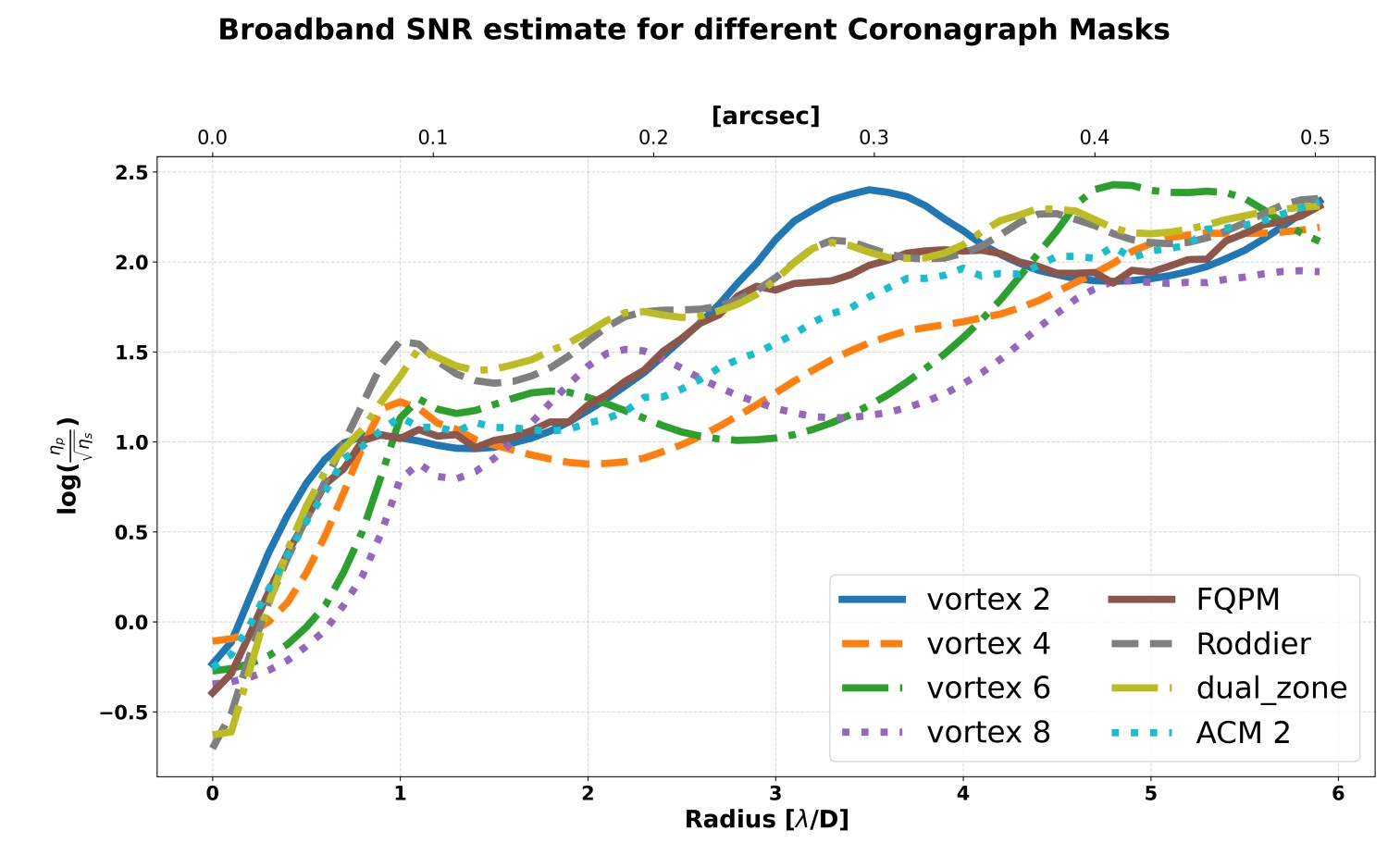
However, these active devices introduce new challenges, such as limitations in spatial resolution, phase precision and accuracy, as well as extra weaknesses due to their pixelated and scalar nature. In this contribution, we present the detailed performance parameter space for pixelated FPM coronagraphs (see Figure 1). We are notably studying the impacts of key parameters such as spatial sampling, phase resolution and stability, and a few typical calibration errors. Using SLM-based systems as a case study, we evaluate several FPM coronagraphs: vortex masks, four-quadrant phase mask (FQPM), Roddier & Roddier and its dual-zone equivalent, and azimuthal cosine masks (ACM). Both monochromatic and broadband (20 percent bandwidth) conditions are considered. Scenarios with and without central telescope obstructions are also assessed, along with varying Lyot stop sizing parameters. Performance is quantified using metrics such as raw contrast (η*), throughput (ηp), and the throughput-to-contrast ratio ηp/√η* , which serves as a proxy for signal-to-noise on an off-axis point source.

Our findings shed light on the error budgets and fundamental trade-offs inherent to pixelated FPM coronagraphs. This is particularly timely with the upcoming first light of the Programmable Liquid-crystal Active Coronagraphic Imager for the 4-m DAG telescope (PLACID) instrument, which will be the first active high-contrast direct imaging instrument to field a LCOS SLM as a programmable digital FPM, operating in the H- to Ks-band. However, the lessons learned from this work may also provide valuable insights beyond the sole use of SLM panels, for instance to printed discretized FPMs or to other future photonic modulators that may exhibit sufficiently fine actuator pitch for focal-plane coronagraphy.

Figure 1, Illustration of the discretization for 8 commonly used coronagraphic FPMs, assuming 10 pixels per diffraction beamwidth: vortex with topographic charge 2, 4, 6 and 8, four-quadrant phase mask (FQPM), Roddier & Roddier, dual zone and azimuthal cosine mask (ACM) with charge 2.


Figure 2, SNR estimate for various coronagraphs in realistic conditions (20% broadband light, DAG telescope pupil with central obstruction, 10 SLM pixels per λ/D, 8-bits digitization). SNR of planetary companion is proportional to ~ ηp /√η* , where ηp is the throughput on an off-axis companion and η* is the transmission on the on-axis host star (null depth).

How to cite: Lin, L., Kühn, J., Potier, A., Tandon, R., and Marquis, L.: Simulating Pixelated Focal-Plane Phase Masks for Coronagraphic High-Contrast Imaging, EPSC-DPS Joint Meeting 2025, Helsinki, Finland, 7–13 Sep 2025, EPSC-DPS2025-127, https://doi.org/10.5194/epsc-dps2025-127, 2025.

F192
|
EPSC-DPS2025-567
|
ECP
|
On-site presentation
Elisa Guerriero, Fabio D'Anca, Alfonso Collura, Giuseppina Micela, Antonio Scippa, Alejandro Jose Fernandez, Javier Perez, Emanuele Pace, Giampaolo Preti, Paolo Picchi, Andrea Tozzi, Maurizio Filizzolo, Salvatore Varisco, Claudio Saitta, Alberto Gulizzi, Davide Vincenzo Cardinale, Michela Todaro, Luisa Sciortino, Ugo Lo Cicero, and Marco Barbera and the Ariel Telescope Assembly Team, INAF Laboratory of Palermo & ASI Ariel TEAM

ARIEL (Atmospheric Remote-sensing Infrared Exoplanet Large-survey) is an ESA mission scheduled for launch around 2030, aimed at investigating the atmospheres of exoplanets through infrared spectroscopy. To support the ground qualification of the Primary Mirror - Structural Model (M1 - SM), INAF – Osservatorio Astronomico di Palermo is converting the historic XACT (X-ray Astronomy Calibration and Test) chamber into a cryogenic vacuum facility dedicated to low-temperature, high-vacuum testing.

The new facility will operate at pressures of 7×10⁻⁷ mbar and reach cryogenic temperatures ∼90 K, achieved through a Helium recirculation cooling system. The setup will be measured using a 4D technology interferometer, capable of rapidly capturing the surface shape of the mirror while minimizing the influence of environmental fluctuations during the measurement process. The test campaign will provide key data on the temperature distribution over the mirror and support the validation of thermal and mechanical FEM (Finite Element Method) models developed for the mission, both with and without flexure-based mounting systems.

The infrastructure is fully compatible with the SM's mounting and handling requirements and has been designed to be reconvertible for future XACT applications, ensuring experimental flexibility. Local execution of the test campaign on M1 SM will allow direct validation of the component’s behavior under realistic environmental conditions, reducing the reliance on simulations alone and contributing to optimizing the final flight configuration.

The facility will remain available for future test campaigns involving optical and structural components intended for space applications in visible and Infrared wavelengths, reinforcing INAF Palermo’s role as a national reference center for vacuum and cryogenic environmental qualification.

How to cite: Guerriero, E., D'Anca, F., Collura, A., Micela, G., Scippa, A., Fernandez, A. J., Perez, J., Pace, E., Preti, G., Picchi, P., Tozzi, A., Filizzolo, M., Varisco, S., Saitta, C., Gulizzi, A., Cardinale, D. V., Todaro, M., Sciortino, L., Lo Cicero, U., and Barbera, M. and the Ariel Telescope Assembly Team, INAF Laboratory of Palermo & ASI Ariel TEAM: Development of a Cryogenic Vacuum Facility for Structural and Thermal Testing of ARIEL’s Primary Mirror (M1 SM) at INAF Palermo, EPSC-DPS Joint Meeting 2025, Helsinki, Finland, 7–13 Sep 2025, EPSC-DPS2025-567, https://doi.org/10.5194/epsc-dps2025-567, 2025.

F193
|
EPSC-DPS2025-742
|
On-site presentation
Angèle Syty, Jean-Philippe Beaulieu, Andrea Bocchieri, Pierre Drossart, Lorenzo Mugnai, and Enzo Pascale

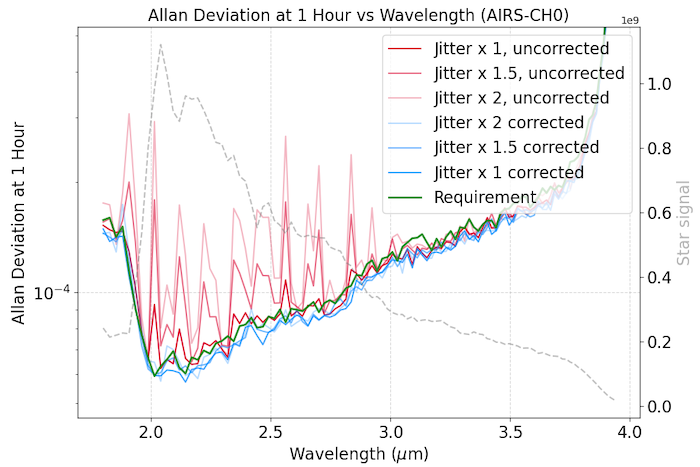
Ariel is a European Space Agency (ESA) mission that aims to study the atmospheres of a large and diverse sample of transiting exoplanets (Tinetti et al. 2021).  Scheduled for launch in 2029 to the L2 Lagrange point. Ariel will observe exoplanets in visible and near-infrared wavelengths (0.5–7.8 µm) via low-resolution spectroscopy. Ariel will use various spectroscopic techniques, including transmission and emission spectroscopy during transits and eclipses, as well as phase curve observations. These measurements will reveal wavelength-dependent variations in the observed spectra, caused by molecular absorption and emission in the planets' atmospheres. This will enable detailed studies of atmospheric composition, clouds, hazes, and thermal structure. To achieve its science objectives, the Ariel consortium must ensure that the noise budget is resilient to different sources of systematics, from the detector, the instrument, or the science scene itself.

The systematics expected are the jitter of the Line of Sight of the telescope (LoS), the pixels’ response non-linearity (PRNL) and bad pixels on the focal plane. PRNL can be explained as capacitive leakage on the readout electronics of each pixel during the integration time. Bad pixels, identified by their non-nominal behavior, are masked from the detector array. Reaction wheels, meant to ensure the stability of the spacecraft, can eventually reach some resonance frequencies, producing a jitter of the LoS of the telescope. The point spread function on the focal plane is shifted and distorted from frame to frame by this jitter effect. Since the pixel response function varies across and within individual pixels (intra-pixel variations), jitter induces photometric noise. This noise level needs to remain under the threshold of 5% above the photon noise as specified by Ariel design requirements. A jitter detrending method has been designed for this purpose (Bocchieri et al, 2025). We found all these effects to be detrendable. For instance, the attached figure is the Allan deviation plot at a one-hour timescale, an indicator of the noise level at the timescale of a planet transit in front of its host star, as a function of the wavelength. The red curves are the noise level without jitter correction, for three different levels of jitter amplitude. The blue curves are the levels of noise after performing jitter correction. Finally, the green curve is the noise level of the Ariel requirement, i.e., 5% above the level of the photon noise, computed with a reference observation containing no jitter at all. These curves are the averaged Allan deviation results obtained from 50 different random noise realizations (photon noise and readout noise); all the other parameters being left unchanged. After jitter correction, the blue curves meet Ariel’s requirement.

In this contribution, the work will be presented as a part of the Ariel Simulators Software, Management and Documentation (S2MD) Working Group, on studying the combined effect of the jitter of the LoS of the telescope, the PRNL, and the presence of permanent bad pixels on the focal plane of the telescope. This work is based on the use of the ExoSim2.0 simulator (Mugnai et al, 2025) to produce simulated Ariel observations, including a chosen set of systematic effects. I used jitter timelines produced by Airbus Defence and Space (ADS), PRNL maps from the JWST NIRSpec detector as representative of the Ariel focal planes, and random maps of permanently masked bad pixels. This work focuses on the Ariel spectrometer AIRS (AIRS-CH0 and AIRS-CH1).  The simulated image time series are processed to correct for the injected systematics, using calibration data with well-defined uncertainty levels, or no calibration data at all, to quantify how sensitive the extracted planet spectrum is to jitter, bad pixels, and PRNL. The models used to correct the previous set of systematics using Bayesian inference will be presented. The results come from three different targets (HD189733, HD209458, and GJ1214), a very bright, bright, and faint target, to capture possible different regimes in the jitter effect, as the exposure time is not the same. This work confirms the resilience of the Ariel instrument design against the set of systematics investigated here. It provides a definition of detrending algorithms that can be considered for implementation in the Ariel data reduction pipeline.

References:

  • Giovanna Tinetti et al. “Ariel: Enabling planetary science across light-years”. In: arXiv e-prints,arXiv:2104.04824 (Apr. 2021), arXiv:2104.04824. arXiv: 2104.04824
  • Mugnai, L.V., Bocchieri, A., Pascale, E., Lorenzani, A., & Papageorgiou, A. (2025). ExoSim 2: the new exoplanet observation simulator applied to the Ariel space mission. Experimental Astronomy.
  • Bocchieri, Andrea, Lorenzo V. Mugnai, Enzo Pascale, Andreas Papageorgiou, Angele Syty, Angelos Tsiaras, Paul Eccleston, Giorgio Savini, Giovanna Tinetti, Renaud Broquet, Patrick Chapman and Gianfranco Sechi. “De-jittering Ariel: an optimized algorithm.” (2025).

Acknowledgments: This work has received support from France 2030 through the project named Académie Spatiale d'Île-de-France (https://academiespatiale.fr/) managed by the National Research Agency under bearing the reference ANR-23-CMAS-0041, and from the Centre National d’Études Spatiales (CNES).

How to cite: Syty, A., Beaulieu, J.-P., Bocchieri, A., Drossart, P., Mugnai, L., and Pascale, E.: Assessing the impact of instrumental systematics on Ariel spectrometer performance using simulated observations, EPSC-DPS Joint Meeting 2025, Helsinki, Finland, 7–13 Sep 2025, EPSC-DPS2025-742, https://doi.org/10.5194/epsc-dps2025-742, 2025.

F194
|
EPSC-DPS2025-1482
|
On-site presentation
Blue Skies Space – a new model for the future of space-based research data
(withdrawn)
Yoga Barrathwaj Raman Mohan, Jonathan Tennyson, Marcell Tessenyi, Giovanna Tinetti, Philip Windred, Richard Archer, Benjamin Wilcock, Ian Stotesbury, Rachel Grant, Lawrence Bradley, Fatemeh Zahra Majidi, Parul Janagal, Arianna Saba, Sarah Harvey, and Tailong Zhang
F195
|
EPSC-DPS2025-1665
|
ECP
|
On-site presentation
Samuel Bowling, Juan Cabrera, Heike Rauer, Rene Heller, Richard Lieu, Denis Grießbach, Carsten Paproth, and Chen Jiang

Motivation

The main science goal of PLATO (PLAnetary Transits and Oscillations of stars) is to detect and characterize extrasolar planets, including terrestrial planets in the habitable zone (HZ) of their host stars. Detecting rocky planets in the HZ requires high photometric stability, which depends on the telescope’s pointing performance. PLATO’s pointing performance is managed by the Fine Guidance System (FGS), which utilizes a catalog of guide stars (fgPIC) to determine the spacecraft’s attitude. The FGS compares the position of these guide stars within the telescope’s CCDs to their position in the sky to determine the spacecraft’s orientation. This is critical, as PLATO’s science mission requires an extremely high level of pointing accuracy. High amounts of variable activity in these guide stars can cause apparent shifts in their centroids in presence of background stellar contaminants. If this happens during science operations, the apparent movement in the guide stars’ centroids will cause the spacecraft to move in an attempt to maintain pointing direction. This movement creates systematic bias in any measurements taken by the spacecraft. The goal of this project is to quantify what, if any, effect astrophysical variability in guide stars will have on PLATO’s pointing stability.

Sample

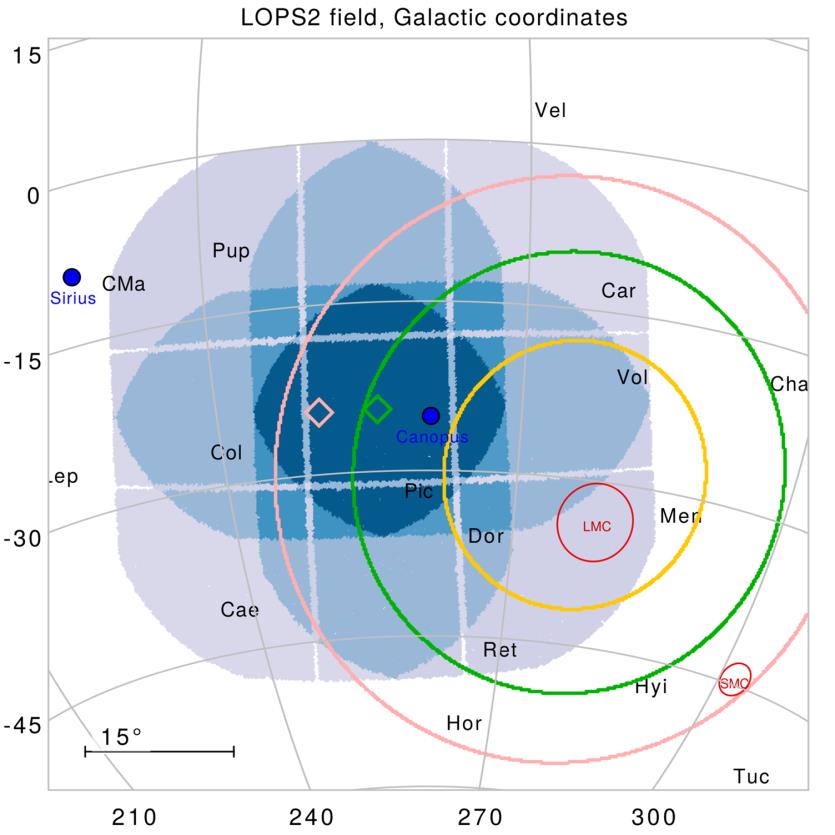
Two preliminary viewing fields for PLATO’s Long-duration Observation Phase (LOP) have been identified: LOPN1 in the Northern hemisphere and LOPS2 in the Southern hemisphere. For this project, focus was placed on the LOPS2 field, although it is fairly simple to adapt this approach for an arbitrary field.

Figure 1: LOPS2  (sourced from PLATO SWT)

A cone search was performed for all G<9 stars in Gaia DR3 within LOPS2, yielding 14681 total stars. Cuts were then placed in the resulting catalog to select those stars that fit the predetermined fgPIC requirements. A final cut was utilized to select those stars that will be seen by PLATO’s CCDs during its initial observations, yielding 1503 total stars. From this, a randomly drawn sample of 30 stars was chosen for testing.  For the stars in this sample, light curves were obtained from TESS full frame images using the Eleanor python library (Feinstein et al. 2019). For each star in our sample, contaminants within 1 arcminute were obtained from Gaia Data Release 3 and the Stellar Pollution Ratio (SPR) was calculated. For a star with  contaminants, SPR is defined as

where F* is the flux of the target star and Fi is the flux of the i-th contaminant.

Variability Analysis

To quantify stellar variability, we utilized an estimator known as FliPer (Flicker in the Power Domain) (Bastien et al. 2018). FliPer is defined as the averaged power spectral density (PSD) from some arbitrary initial frequency to the Nyquist frequency, corrected for photon noise. Photon noise for our TESS photometry was calculated using an empirical relation found by Kunimoto et al 2022.

FliPer serves as a robust measure of stellar variability as it has shown a strong correlation with fundamental stellar properties, particularly surface gravity.

Figure 2: FliPer vs. log(g) for stars in TESS Sector 33

Simulation

Simulated PLATO imagettes were created using the PlatoSim python library. Each round of simulations was performed with all sources of instrumental noise turned off and a constant background to minimize systematic effects. Three rounds of simulations were performed on each star in the sample. In the first round, the stars were constant. In the second round, the TESS photometry was introduced. Finally in the third, constant contaminants were added. 200 exposures per star were simulated for the first round, and 40320 exposures were simulated for the next two, as this number was close to the upper limit before memory issues were encountered.

Pointing Stability

Centroid coordinates for each simulated exposure are obtained through a PSF fitting algorithm. In this algorithm, an observation h(i, j) of a given pixel is modelled as a Gaussian PSF

with centroid position (uc, vc), PSF width σ, intensity I, background D, and random noise ξ.  The centroid is then determined by minimizing the distance function

for each pixel y(i, j) and unknowns α = (uc, vc, σ, I, D). (Grießbach et al. 2021). Since the FGS relies on measuring the guide stars’ centroids for attitude determination, we choose the transverse T of the centroid coordinates x and y 

in the boresight reference frame as an estimator of pointing stability.

Results

For each simulated dataset, the Spearman correlation coefficient  between the centroid noise and the base-10 logarithm of the FliPer was calculated. For the constant light curves, no significant correlation  was found, as expected. Low correlation was found for the variable cases without contaminants and with contaminants. However, correlation increases significantly for the case with contaminants when only considering stars with SPR >0.002.

Figure 3: FliPer vs. noise for sample with constant light curves.

Figure 4: FliPer vs. noise for sample without contaminants

Figure 5: FliPer vs. noise for sample including contaminants

Case ρ
Constant light curves 0.0107
Variable targets with no contaminants 0.289
Variable targets with contaminants 0.240
Variable targets with bright contaminants 0.400

How to cite: Bowling, S., Cabrera, J., Rauer, H., Heller, R., Lieu, R., Grießbach, D., Paproth, C., and Jiang, C.: The Effect of Guide Star Variability on PLATO Pointing Stability, EPSC-DPS Joint Meeting 2025, Helsinki, Finland, 7–13 Sep 2025, EPSC-DPS2025-1665, https://doi.org/10.5194/epsc-dps2025-1665, 2025.